Study Links Prenatal Exposure to Sulfate and Ammonium in Air Pollution with Higher Autism Risk in Children
A new study published in JAMA Network Open reveals that fetal exposure to sulfate and ammonium components of fine particulate matter (PM₂.₅) significantly increases the risk of autism spectrum disorder (ASD) in children. Analyzing over two million births in Ontario, researchers found that exposure during mid-to-late pregnancy raised ASD risk by up to 15%. Total PM₂.₅ mass alone was not predictive, emphasizing the importance of specific pollutants. Ozone exposure during the first postnatal year also showed elevated risk. The findings highlight the need for targeted pollution control, particularly in urban and socioeconomically disadvantaged communities.

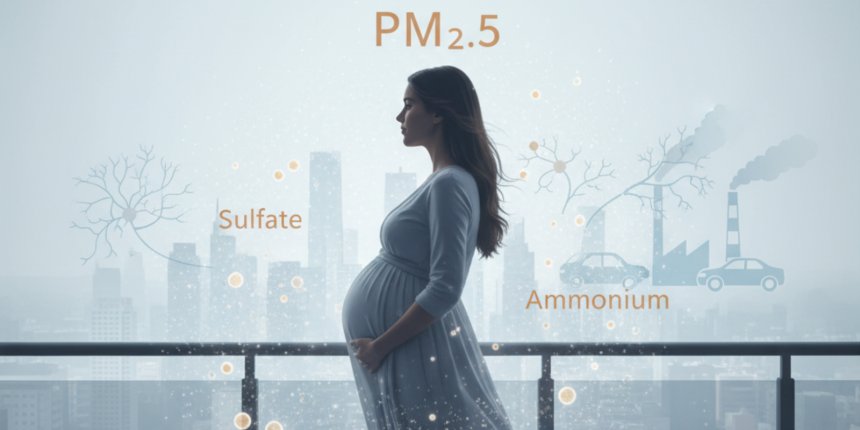
Fetal Exposure to Sulfate and Ammonium in Fine Particulate Matter Associated with Increased Childhood ASD Risk
Key Highlights
- Large population-based study in Ontario (2,183,324 births) links prenatal exposure to sulfate and ammonium components of PM₂.₅ with higher childhood ASD risk.
- Sulfate exposure during mid–late pregnancy associated with ≈15% higher ASD risk per IQR; ammonium ≈12% per IQR.
- Total PM₂.₅ mass was not independently associated with ASD risk after accounting for sulfate and ammonium components.
- Ozone exposure during the first postnatal year associated with ≈9% higher ASD risk.
- Mid–late pregnancy (specific trimester windows described) appears to be the most vulnerable period; associations stronger in male infants.
Summary — What You’ll Read
This article synthesizes a population-level analysis published in JAMA Network Open that evaluates whether specific non-metal chemical components of fine particulate matter (PM₂.₅)—notably sulfate and ammonium—during prenatal and early-life windows increase the risk of autism spectrum disorder (ASD) in children by age five. We explain study design, key results, plausible biological mechanisms, implications for clinicians and public health, limitations, and policy-relevant recommendations.
1. Introduction and Context
Fine particulate matter (PM₂.₅; particles ≤2.5 µm) is a heterogeneous mixture produced by combustion sources, traffic, industrial activities, and secondary atmospheric chemistry. While many epidemiologic studies have examined total PM₂.₅ mass and adverse health outcomes, chemical components within PM₂.₅ can vary in origin, toxicity, and biological effect. The present analysis, reported in JAMA Network Open, uses near-complete administrative birth records in Ontario, Canada to evaluate whether prenatal or early-life exposure to seven PM₂.₅ components (black carbon, dust, ammonium, nitrate, organic matter, sulfate, sea salt) and common gaseous pollutants (NO₂, ozone) are associated with ASD diagnosis by age five. Based on the authors’ analysis, sulfate and ammonium emerged as the components most strongly associated with ASD risk during specific prenatal windows, and first-year ozone exposure was also implicated.
2. Study Design and Key Findings
Design & data: The study analyzed administrative health data covering ~98% of births in Ontario, including 2,183,324 term births (gestational age 36–42 weeks). Researchers estimated biweekly concentrations of PM₂.₅ components and weekly concentrations of NO₂ and ozone from conception to 36 weeks’ gestation using satellite and ground-based models. Prenatal models adjusted for first-year postnatal exposure to isolate in utero effects. Outcomes were autism diagnoses by age five, analyzed with time-window models to identify critical exposure periods.
Main results:
- Prenatal sulfate exposure was associated with ~15% higher risk of ASD per interquartile range (IQR) increase.
- Prenatal ammonium exposure was associated with ~12% higher risk of ASD per IQR increase.
- Total PM₂.₅ mass was not significantly associated with ASD risk once sulfate and ammonium were considered, suggesting component-specific effects.
- Ozone exposure during the first postnatal year was associated with ~9% higher ASD risk; prenatal ozone findings attenuated after adjustment.
- Critical windows: mid–late pregnancy (approximate windows reported: weeks 14–32 for PM₂.₅ mass, weeks 23–36 for sulfate, weeks 21–34 for ammonium) showed the strongest associations. Sex-stratified analyses suggested stronger effects among males, although sulfate remained significant in females.
3. Plausible Mechanisms and Biological Rationale
Several interrelated biological pathways could explain how exposure to specific PM₂.₅ components during key developmental windows contributes to neurodevelopmental vulnerability:
- Oxidative stress and neuroinflammation: Sulfate and ammonium have been linked in experimental models to oxidative damage and activation of inflammatory pathways in the central nervous system—processes implicated in ASD pathophysiology.
- Epigenetic modulation: Fine PM exposure can induce DNA methylation changes in genes important for neurodevelopment, potentially altering gene expression patterns during critical periods.
- Gut–brain axis: Air pollution may alter gut microbiota composition and tryptophan metabolism, promoting systemic inflammation and modulating neurodevelopmental signaling.
- Direct neurotoxicity: Some PM components (or secondary products formed in the lung) can translocate systemically and cross the placenta, exposing the fetus to neuroactive substances during periods of intense neuronal differentiation and synaptogenesis.
4. Impact on Healthcare Professionals
This study informs multiple stakeholder groups in healthcare:
- Clinicians (obstetricians, pediatricians): Awareness of environmental risks during pregnancy supports counseling on exposure reduction (e.g., minimizing high-exposure activities, using indoor air filtration where feasible), particularly for patients in urban, high-exposure neighborhoods.
- Allied health & public health practitioners: Findings strengthen the rationale for targeted community-level interventions (improved air monitoring, mitigation measures near high-emission sources) and for including environmental history in perinatal risk assessments.
- Researchers: Results highlight the need for mechanistic studies that distinguish effects of chemical PM components, and for cohort studies with individual-level exposure measurement and genetic/epigenetic data.
- Administrators & policymakers: Evidence supports prioritizing emission reductions for sulfate- and ammonium-producing sources, and for air-quality improvement programs focused on vulnerable populations and pregnancy care settings.
5. Impact on Patients & Public Health
The study’s population-level findings carry several practical implications for patients and public health:
- Risk communication: Pregnant people and families should be informed about air pollution as a modifiable risk factor for neurodevelopmental outcomes and advised on practical exposure-reduction strategies.
- Equity considerations: Associations were stronger in urban and socioeconomically deprived neighborhoods and among communities with higher proportions of racialized or newcomer populations—groups more likely to live near high-emitting facilities or major roadways. This underscores environmental justice priorities.
- Public health programming: Interventions such as urban planning to reduce residential exposure (buffer zones between highways/industrial sites and housing), emissions controls, and community air filtration initiatives may reduce population-level risk.
- Care pathways: Higher surveillance for developmental concerns and earlier referral to diagnostic and therapeutic services could be considered for children with known high prenatal/early-life exposure, while balancing the limitations of ascertainment and overmedicalization.
6. Future Outlook & Policy Implications
Long-term implications from these findings include:
- Policy targeting specific sources: Because sulfate often derives from high-sulfur fuel combustion and ammonium from agricultural/ammonia sources and urban emissions, targeted regulatory actions (cleaner fuels, agricultural ammonia management, vehicle-emission reductions) could be prioritized.
- Enhanced exposure assessment: Future studies should incorporate personal monitoring, biomarkers, and higher-resolution spatiotemporal exposure models to reduce misclassification and to better inform interventions.
- Interdisciplinary prevention strategies: Effective risk reduction will require collaboration across sectors—health, environment, transportation, agriculture—and alignment with environmental justice goals.
- Clinical guideline considerations: Professional societies may consider environmental exposure guidance for prenatal care and early-childhood surveillance, informed by evolving evidence.
Conclusion
In a large population-based analysis reported in JAMA Network Open, prenatal exposure to sulfate and ammonium components of PM₂.₅—particularly during mid–late pregnancy—was associated with a measurable increase in the risk of autism spectrum disorder by age five, while ozone exposure during the first postnatal year also demonstrated an independent association. These component-specific signals, and their concentration in urban and socioeconomically disadvantaged neighborhoods, point to both mechanistic questions for researchers and actionable policy levers for public health and regulatory agencies. Clinicians and health systems should incorporate these findings into risk communication and consider advocating for community-level interventions that reduce prenatal and early-life exposure to harmful air-pollution components.
Based on a report by JAMA Network Open (Cloutier M., 2025).
References
Overall Healthcare Significance & Future Impact
This study elevates the importance of analyzing chemical components of PM₂.₅ — rather than relying solely on total mass — when assessing neurodevelopmental risk. For healthcare, it strengthens the rationale for incorporating environmental exposure awareness into prenatal care, for prioritizing preventive public health actions in high-risk communities, and for interdisciplinary policies aimed at reducing specific emission sources. Over the next decade, component-focused air-quality regulation, improved exposure science, and targeted community interventions could materially reduce preventable neurodevelopmental risk attributable to ambient pollution.
Share