Research Uncovers How Cancer Hijacks Nerve Signals to Evade the Immune System
Groundbreaking research reveals that cancer cells exploit nerve pathways to suppress immune defenses. The study uncovers how the ATF4–SLIT2–CGRP axis triggers pain, weakens immunity, and reduces immunotherapy effectiveness — offering new hope for innovative cancer treatments.

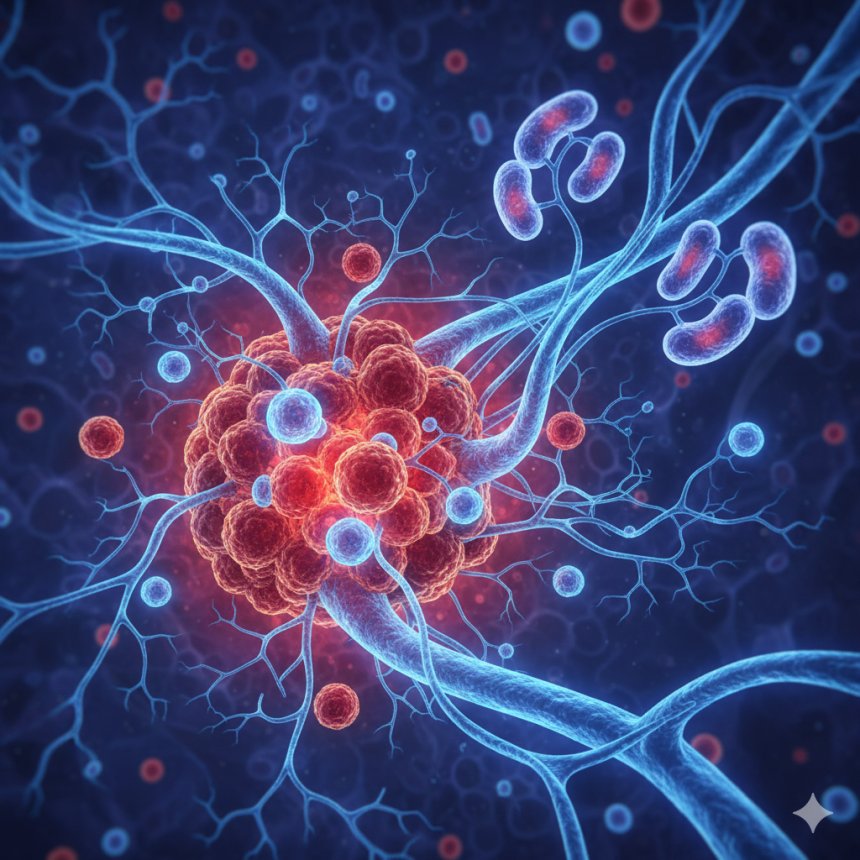
Research finds that the way cancer manages to sneak past the body’s immune system could be linked to the nerves connecting distant organs. Using both patient data from head and neck squamous cell carcinoma (HNSCC) and several mouse models, scientists discovered an unusual connection that might explain how tumors evade immune detection.
Under immune pressure, cancer cells start to secrete a protein known as SLIT2, controlled by a factor called ATF4. This reaction sets off pain-sensing neurons (nociceptive neurons) inside the tumor, which not only increases cancer-related pain but also impacts nearby lymph nodes responsible for immune responses.
The activation of these neurons triggers the release of another chemical messenger, CGRP, which alters the lymph nodes into a suppressed immune state. This weakens the body’s natural defenses and helps the tumor grow even more rapidly.
When the lymph nodes produce less CCL5, it encourages immune cells called macrophages to switch to a tumor-supportive form, known as M2-like macrophages. This environment reduces the success of immune checkpoint therapies that are designed to fight cancer.
Interestingly, researchers found that by blocking pain-related neurons or the ATF4–SLIT2–CGRP pathway, immune activity could be reactivated, cancer-related pain decreased, and immunotherapy results improved significantly. These findings open the door to possible new treatments that target the nerve-immune connection rather than the tumor alone.
Experts say this research uncovers an intricate neuroimmune circuit that cancer hijacks to survive. Understanding this process could pave the way for more effective therapies that not only attack tumors directly but also reawaken the immune system to do its job.
Share