Breakthroughs in Medical Research — October 2025
October 2025 has seen landmark medical research breakthroughs—including a novel cancer therapy targeting RAS mutations without harming healthy cells, and the first implant to restore reading vision in dry AMD patients. Explore the science, implications, and future outlook.
Summary |
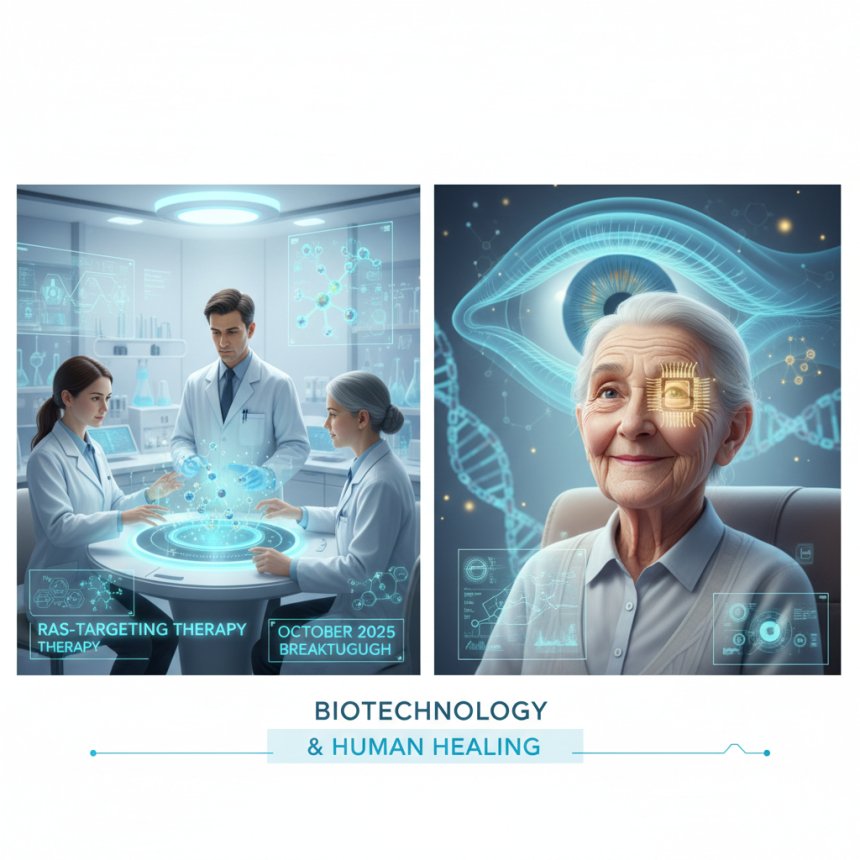
October 2025 marks a turning point in medical science with two revolutionary breakthroughs: a RAS-targeting cancer therapy that halts tumour growth without harming healthy cells, and a vision-restoring microchip implant that enables patients with advanced dry AMD to read again. These innovations redefine what’s possible in oncology and ophthalmology, showing how precision medicine and bioengineering are transforming healthcare. Dive into the full article to explore the science, patient impact, and future outlook of these life-changing discoveries. If you can donate $1 to survive as a content writer. 💬 Share your thoughts in the comment box below — your feedback helps us tailor future insights to your needs! |
Introduction
In October 2025, the medical research world witnessed truly profound advances. Two landmark developments deserve special attention: first, a novel therapeutic compound that disrupts tumour growth by targeting the infamous RAS gene-driven signalling pathway—achieving tumour growth arrest in animal models with minimal damage to healthy tissue. ScienceDaily Second, an ophthalmological milestone: the first implantable device that restored reading vision in patients with advanced dry Age‑related Macular Degeneration (AMD). Macular Society
Together, they illustrate how precision medicine, bioengineering and translational research are converging to turn what once seemed like science-fiction into real treatments. In this article, we’ll explore each breakthrough in depth—the scientific background, how the research was done, why it matters, and what comes next. We’ll also look at broader themes: how these breakthroughs reflect shifts in how we treat disease and how research is evolving.
1. Background to Cancer Therapy Innovation
1.1 The challenge of RAS-driven cancers
The RAS family of genes (KRAS, NRAS, HRAS) has long been a central target in cancer research. Mutations in RAS occur in roughly one in five human cancers, and when mutated these genes become locked in an “on” position, constantly signalling cells to grow and divide. ScienceDaily Because RAS proteins are small, highly conserved and interact with multiple pathways, they have been notoriously difficult to “drug” directly—earning the moniker “undruggable” for decades.
1.2 Previous therapy limitations
Existing cancer treatments often lack precision: chemotherapy, radiation and many targeted therapies typically affect both tumour and healthy cells, leading to side-effects and toxicity. Approaches aimed at blocking RAS or its downstream pathways have often foundered because of compensation mechanisms, toxicity or inability to get specificity.
1.3 The research collaboration and discovery
In the recent breakthrough, scientists at the Francis Crick Institute in the UK, in conjunction with Vividion Therapeutics, discovered chemical compounds that prevent mutated RAS from binding to the RAS-binding domain of PI3Kα, thereby shutting down a key growth-signalling axis in tumour cells. ScienceDaily Importantly, the treatment worked in mouse models of lung and breast tumours and showed minimal off-target damage to healthy cells.
2. The Novel RAS-Targeting Therapy
2.1 Mechanism of action
The new compound is a covalent inhibitor directed at the RAS-binding domain of PI3Kα, specifically impairing the interaction between RAS and PI3Kα. This effectively blocks the downstream signalling cascade that drives proliferation in RAS-mutant tumour cells. ScienceDaily Because it doesn’t rely on broadly shutting down cell-division signalling in all cells, it has the potential for greater selectivity and fewer side-effects.
2.2 Preclinical results in animal models
In the published work, the compound was administered to mice bearing lung or breast tumours driven by mutated RAS. Tumour growth was significantly suppressed, while healthy tissues showed minimal harm. ScienceDaily This is a major milestone because many earlier drugs either failed to sufficiently suppress RAS-driven tumours or caused unacceptable toxicity.
2.3 Translation into human trials
The authors report that the therapy is now entering its first human clinical trials. If safety and efficacy translate into humans, it opens the door to a new class of precision medicine for RAS-driven cancers. ScienceDaily
3. Why This Matters: Clinical and Scientific Implications
3.1 For patients and clinicians
For patients with cancers driven by RAS mutations—a group that historically has had limited therapeutic options—this development offers a potential paradigm shift. It might convert a once-lethal prognosis into a disease that can be managed with targeted therapy and lower toxicity. For clinicians, it adds to the arsenal of precision oncology: matching therapy to genetic drivers.
3.2 For cancer research and drug development
From a research viewpoint, this signifies that even the “undruggable” RAS may be susceptible to targeted inhibition when the right molecular interface is blocked. It encourages investment and effort into other previously refractory targets. It also underscores the power of combining structural biology, medicinal chemistry and in-vivo models to advance discovery.
3.3 For the future of therapy design
This breakthrough may herald a shift in therapeutic design: from broad-spectrum cytotoxic drugs toward molecules that interrupt specific protein–protein interactions unique to tumour biology while sparing healthy tissue. It also highlights the value of early translational work—from in-cell assays to animal models to human trials.
4. What Comes Next – Challenges and Opportunities
4.1 Translational hurdles
Although the animal data are promising, human biology is more complex. Tumours often have heterogeneous cell populations, multiple signalling redundancies and adaptive resistance. Safety, pharmacokinetics and off-target effects still need rigorous monitoring in humans. Early trials will be crucial.
4.2 Biomarker development and patient selection
For maximal effect, patients will need to be selected based on presence of RAS mutations or relevant biomarkers (e.g., RAS–PI3Kα binding activity). Companion diagnostics will be required to stratify patients and monitor response. Resistance mechanisms may emerge, requiring follow-on strategies.
4.3 Combination therapies and resistance management
It’s unlikely that a single drug will cure cancer; combination with immunotherapy, targeted agents, or chemotherapy may be needed. Researchers must anticipate resistance: e.g., tumour cells may bypass the blocked pathway or up-regulate alternate circuits. Research on these fronts must proceed in parallel.
4.4 Regulatory, manufacturing and access issues
From regulatory approval to manufacturing scale-up to patient access (cost, global equity) there are many hurdles. If successful, ensuring that this therapy reaches underserved populations and not just wealthy countries will be essential.
5. Background to the Ophthalmology Breakthrough
5.1 Understanding dry AMD
Dry age-related macular degeneration (AMD) is a leading cause of central vision loss among older adults. Unlike the “wet” form, which has treatment options (e.g., anti-VEGF injections), the dry form lacks effective therapies once advanced. Loss of central vision significantly impairs reading, face recognition, and quality of life.
5.2 Previous attempts at vision restoration
Previous methods to restore vision in advanced AMD included retinal implants, prosthetic devices, gene therapy trials and stem-cell approaches—but they often resulted in extremely limited vision restoration, or were applicable only early in disease. There has been a long-standing unmet need for a therapeutic modality that enables reading and meaningful vision in patients who have already lost central vision.
5.3 The clinical trial and device design
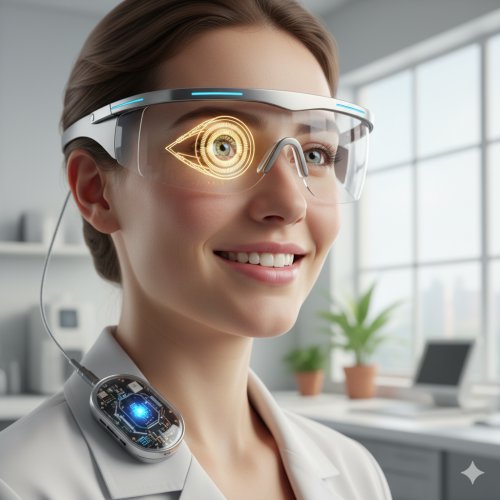
The recent study involved the PRIMA System, a specialised implant placed beneath the retina, working in tandem with augmented-reality glasses that capture images and convert them into signals directed via the optic nerve. The clinical trial included 38 patients (across UK, France, Italy, the Netherlands) with no central vision before the implant. Macular Society+1
6. The Vision Restoration Breakthrough
6.1 Mechanism and surgical approach
The PRIMA System’s small sub-retinal implant (2 mm square) receives wireless signals from wearable augmented-reality glasses. These glasses capture a video feed, convert it into stimulation that healthy retinal cells can transmit to the brain. According to reports, within one year post-implantation, 84 % of patients were able to read letters, numbers and words. The Times The surgical implantation lasts under two hours, followed by rehabilitation to train visual perception.
6.2 Clinical outcomes and patient experience
A key qualitative outcome was that participants who previously had no central vision regained meaningful reading vision and the ability to recognize faces or perform daily tasks. One 70-year-old former avid reader described the emotional significance of regaining sight after years of blindness. The Times On average, patients read up to five lines on an eye chart. Macular Society
6.3 Safety and feasibility
In the trial so far, the procedure appears safe and feasible, and the outcome demonstrates that the retina and brain can adapt to the artificial signal input from the implant-glasses system. This is a major technical and biological achievement.
7. Why This Matters: Vision, Quality of Life, and Technology Convergence
7.1 For patients and society
For patients with advanced dry AMD, the possibility of regaining reading vision is transformative—not just medically but in terms of independence, psychological well-being and quality of life. The economic and social burden of blindness (loss of productivity, caregiving needs, accident risk) is significant; technologies that restore vision could reduce those burdens.
7.2 For bioengineering and ophthalmology
This device exemplifies convergence of multiple fields: microelectronics, augmented-reality wearables, wireless signalling, retinal biology and neurology. It sets a new standard for what is possible—moving beyond therapies that slow disease progression, to ones that restore function. It also may pave the way for similar devices in other forms of vision loss (e.g., retinitis pigmentosa).
7.3 For medical device innovation
It demonstrates how miniaturised implants + external wearable interfaces + neuroplastic adaptation can combine to restore complex functions. The success of this system encourages further innovation in “bionic” medicine: where implants and wearables bridge biological loss.
8. What Comes Next – Future Directions and Considerations
8.1 Scaling the technology
The current trial is limited in patient numbers and geography. Wider adoption will require regulatory approvals, larger multi-centre trials, long-term follow-up for durability of vision restoration, cost-effectiveness studies and training of surgeons and rehabilitation specialists.
8.2 Rehabilitation and visual training
Restoring hardware is just the first step—the brain needs to learn to interpret the new signals. Rehabilitation protocols must evolve and become standardised to optimise patient outcomes, especially given the age of many AMD patients.
8.3 Expanding to other vision disorders
If successful, the technology could be adapted to other forms of central vision loss (e.g., advanced macular dystrophies), or extended to peripheral vision restoration. Research into how various retinal cell types respond to artificial stimulation will be key.
8.4 Accessibility and cost
As with all high-tech implants, cost and accessibility will determine real-world impact. Ensuring wider access in lower-income settings will be a challenge. Ethical considerations about implantation in older patients, versus early intervention, will also arise.
9. Broader Themes: Translational Medicine, Precision Devices, and Research Ecosystem
9.1 Convergence of disciplines
Both breakthroughs underscore how medicine is no longer siloed by discipline: oncology therapies draw on structural biology, chemistry and genetics; vision implants draw on electronics, wearables, neurobiology and ophthalmology. This convergence is accelerating discovery.
9.2 Precision and personalised intervention
Instead of one-size-fits-all medicine, we are moving toward therapies tailored to the patient (RAS mutation status, gene drivers) or to the dysfunction (retinal implant for a specific vision loss pattern). This is the promise of precision medicine and precision devices.
9.3 Speed of translation from bench to bedside
Historically, it took many years for discoveries to reach clinical use. The breakthroughs reported here reflect a faster pace—enabled by advanced technologies, better funding, better models and collaborative research. This suggests the research ecosystem is becoming more efficient.
9.4 Ethical, regulatory and access considerations
With greater power comes greater responsibility. Ensuring equitable access, monitoring long-term safety, preventing exploitation or over-hype, and aligning regulatory frameworks with rapid innovation are critical. These breakthroughs will likely raise important policy questions.
10. Possible Risks, Limitations and Cautions
10.1 For the cancer therapy
Animal results are promising but do not guarantee human efficacy.
Resistance mechanisms may emerge, limiting long-term benefit.
Off-target or unforeseen toxicity may appear in humans.
High cost of targeted therapy may limit accessibility.
10.2 For the vision implant
Not all patients may be suitable (depends on residual retinal cell health, optic nerve function).
Durability of the implant and long-term visual gains need evaluation.
The implant may restore only partial vision (e.g., reading lines) not full “natural” vision.
Cost, surgical risk and rehabilitation burden may limit uptake.
10.3 For both fields
Hype may outstrip reality; careful communication is required to manage expectations.
Research must ensure diverse patient populations are included (age, ethnicity, comorbidities) so benefits are generalisable.
Regulatory approval and reimbursement will be non-trivial; health-economic data will matter.
11. Impact on Global Health and Future Outlook
11.1 Global cancer burden
Cancer remains a leading cause of death worldwide. Innovations that target tumour-specific drivers with less toxicity have the potential to revolutionise outcomes globally. However, equitable distribution will be key: ensuring that low- and middle-income countries also benefit will be a major challenge.
11.2 Vision loss and demographic shifts
As populations age globally, the burden of AMD and other degenerative eye diseases is rising. Technologies that restore vision will become increasingly important. Cost-effective, scalable devices could have substantial public-health impact.
11.3 Research ecosystem acceleration
These breakthroughs reflect a maturing ecosystem: faster translational pipelines, convergence of engineering and biology, largescale funding and global collaboration. The coming decade may yield even more disruptive therapies (e.g., gene editing, cell therapies, bionic organs) earlier in the clinical pipeline.
11.4 Toward a new norm of “restoration”
Until recently, medicine largely sought to slow disease progression or alleviate symptoms. Now we are increasingly seeing true functional restoration (vision, tumour eradication) as realistic goals. This paradigm shift changes how we think about treatment: not just survival, but restoration of normal life and function.
12. How Patients, Clinicians and Researchers Should Respond
12.1 Patients and caregivers
Stay informed: Ask about eligibility for trials or new therapies if relevant.
Manage expectations: Understand that “breakthrough” doesn’t always mean “immediate cure”.
Consider rehabilitation and holistic care: Especially in devices and implants, post-procedure training matters.
Engage in shared decision-making: Understand risks, benefits, cost implications.
12.2 Clinicians and ophthalmologists/oncologists
Monitor emerging trial data: As first-in-human results appear, be ready to evaluate new options.
Develop multidisciplinary teams: Combining genetics, imaging, rehabilitation specialists, bio-engineering support.
Participate in and encourage trial enrolment: This is how these therapies advance.
Prepare for changing practice patterns: Precision diagnostics, implant centres, post-care services will become more common.
12.3 Researchers and funders
Foster cross-disciplinary collaboration: Engineering + biology + clinical medicine yields the biggest breakthroughs.
Design translational pipelines: From bench to bedside faster, but with robust safety and ethics frameworks.
Ensure diversity and global representation: Both in research subjects and in access.
Consider cost and scalability from the outset: A breakthrough that remains inaccessible limits its impact.
13. Comparison Table: Two Breakthroughs Side by Side
| Feature | Cancer Therapy (RAS-targeting) | Vision Implant (Dry AMD) |
|---|---|---|
| Disease Target | RAS-mutant cancers (e.g., lung, breast) | Advanced dry age-related macular degeneration |
| Mechanism | Small-molecule inhibitor of RAS–PI3Kα binding | Sub-retinal micro-implant + augmented reality glasses |
| Preclinical Evidence | Mouse tumour models, tumour growth suppression | Clinical trial: 38 patients, reading ability restored |
| Human Trial Status | Entering first human trials | Early patients treated; multi-centre European trial |
| Main Benefit | Tumour suppression with minimal healthy cell damage | Restoration of reading vision in formerly blind eye |
| Key Challenges | Translating preclinical to human; resistance | Scaling surgery/rehab; cost; durability |
| Broader Implications | Precision oncology for historically “undruggable” target | Bionic restoration of vision; convergence of tech & biology |
14. Scientific References and Further Reading
-
Klebba J.E., Roy N., Bernard S.M., et al. “Covalent inhibitors of the PI3Kα RAS binding domain impair tumour growth driven by RAS and HER2.” Science, 2025; DOI:10.1126/science.adv2684. (via ScienceDaily) ScienceDaily
-
“Revolutionary implant allows patients with dry AMD to read again.” The Macular Society, October 2025. Macular Society
-
“Vision restored in blind patients with revolutionary microchip (AMD implant).” The Times, October 2025. The Times
-
“Breakthrough cancer therapy stops tumour growth without harming healthy cells.” ScienceDaily, October 19 2025. ScienceDaily
-
“Medical research highlights, October 2025.” University of Nebraska Medical Center (UNMC) Newsroom. University of Nebraska Medical Center
15. Conclusion
October 2025 has brought us milestones worth celebrating—and worth serious reflection. The advent of a targeted therapy that may finally crack the code of RAS-driven cancers, and the first device to restore reading vision in advanced dry AMD, are both testaments to human ingenuity, persistent investment and translational research done well.
Yet with celebration comes caution: the path from promising early results to routine clinical use is long, and fraught with scientific, regulatory, ethical and access-related hurdles. What truly counts is how these therapies perform over years, how widely they can be adopted, and whether they reduce the disparities in global health outcomes.
For clinicians, patients and researchers, the message is clear: we are entering a new era of medicine where restoration of function—not just slowing decline—is becoming a realistic goal. The next few years will be critical in converting this promise into widespread benefit.
Share