Research Breakthrough: New Eye Implants and AR Glasses Help Blind People Read Again in Groundbreaking Trial
A revolutionary study reveals that 80% of patients with age-related macular degeneration (AMD) regained the ability to read using a new eye implant combined with augmented-reality glasses. Discover how this innovation is redefining artificial vision.

New Eye Implants and AR Glasses Help Blind People Read Again in Groundbreaking Trial
Imagine waking up one day and realizing that the world you once saw so vividly has faded into shadows. For millions suffering from age-related macular degeneration (AMD), this is a heartbreaking reality. But now, science has taken a monumental leap forward — giving hope to those who once believed sight was gone forever.
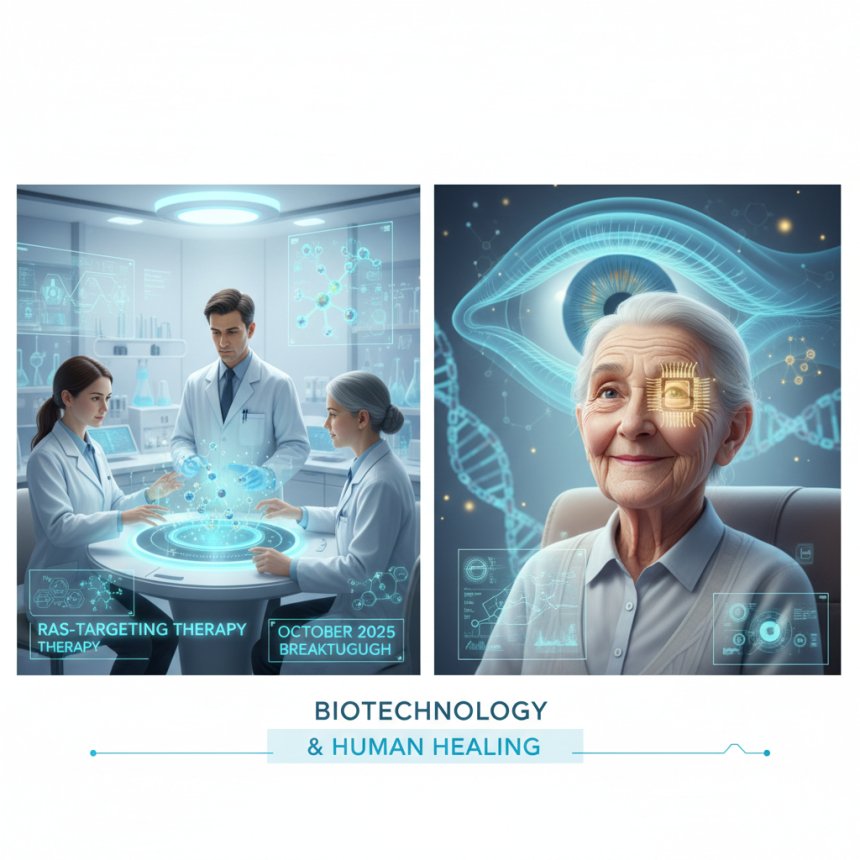
In a small clinical trial, 38 European patients who had lost their central vision to AMD experienced what many called a “miracle.” Through a surgically implanted chip and augmented-reality (AR) glasses, nearly 80% regained the ability to read letters and words just a year after treatment. This pioneering study, published in The New England Journal of Medicine on October 20, marks a milestone in artificial vision technology.
A New Era in Artificial Vision
Dr. Mahi Muqit, ophthalmologist at University College London and Moorfields Eye Hospital, described the breakthrough as “a new era in artificial vision.” For the first time, blind patients are experiencing meaningful central vision restoration — something that, until now, had never been possible.
AMD, which affects the macula (the central part of the retina), is the leading cause of blindness among adults over 65. When this region deteriorates, it leads to central vision loss, leaving individuals with only peripheral sight or complete blindness. The advanced form of AMD, known as geographic atrophy, destroys retinal cells, affecting nearly 5 million people worldwide.
A Patient’s Journey: Seeing Letters Again
One of the participants, Sheila Irvine, shared her life-changing experience.
“Before receiving the implant,” she said, “it was like having two black discs in my eyes, with everything around them distorted.”But after the surgery and months of training, she began to see letters again for the first time in years. “It’s not simple, learning to read again,” she admitted, “but the more hours I put in, the more I pick up.”
Her story embodies hope — a glimpse into how cutting-edge science can restore what once seemed lost forever.
How the Technology Works: The PRIMA System
The innovation behind this miracle is called the Photovoltaic Retina Implant Microarray (PRIMA System). Here’s how it works:
A tiny electronic chip is surgically implanted under the retina, right beneath the cells damaged by AMD.
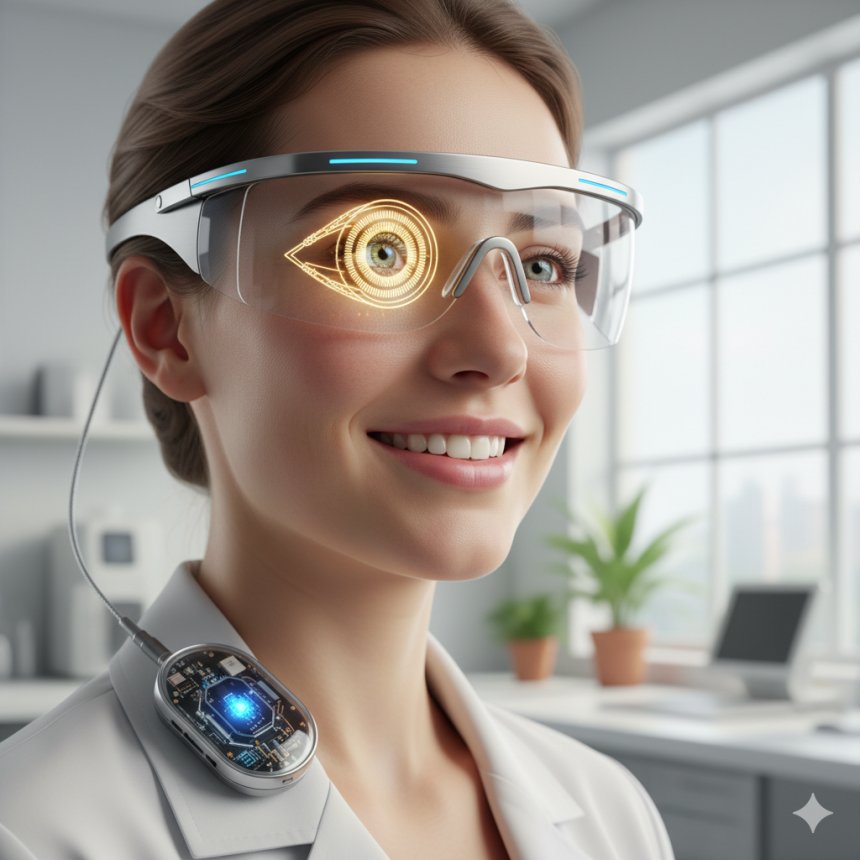
The chip connects wirelessly to a pair of augmented-reality glasses linked to a small computer worn on the user’s waistband.
The camera in the AR glasses captures images — such as letters or words — and projects them as infrared light onto the implanted chip.
The chip converts the light into electrical signals, which are then interpreted by the brain as visual information.
This system essentially recreates sight by transforming light into brain-readable signals, allowing users to “see” using a combination of biological and digital inputs.
Learning to See Again
The process doesn’t end with surgery. Patients undergo months of specialized training to interpret the new visual information. They start by recognizing basic shapes and letters, then gradually progress to reading words and sentences.
Sheila used the device to do crossword puzzles, while another patient successfully navigated the Paris Metro system using it. The zoom feature in the AR glasses even allows users to read fine-print text — such as medication labels — giving them newfound independence.
Current Limitations and Future Promise
Despite its success, the PRIMA System still has room for improvement. According to Dr. Demetrios Vavvas, director of the Retina Service at Mass Eye and Ear, the device currently restores vision only in black and white, without the ability to detect colors or shades of gray. This limitation makes it difficult to recognize faces or detailed imagery.
Moreover, researchers are still studying whether the implant’s effectiveness will remain stable over time. Long-term data is needed to confirm its durability and performance.
However, Dr. Vavvas remains optimistic:
“As the iterations of this device become better and better, it could become a real solution for a cohort of patients.”
And he’s not alone — many experts see this as just the first step toward full visual restoration.
Training, Adaptation, and the Human Brain’s Role in Vision Recovery
The journey to restored vision doesn’t end in the operating room — in many ways, that’s where it begins. The human brain, remarkable in its adaptability, plays a crucial role in helping patients interpret the new kind of visual data provided by the PRIMA system.
Patients must retrain their visual cortex, which may have been dormant for years due to blindness. The process is both challenging and fascinating. At first, patients describe what they see as flashes of light or vague outlines. Over time, through neuroplasticity, their brains begin to associate electrical signals with shapes, letters, and words. This adaptation process varies from person to person but typically takes several months of focused rehabilitation.
Specialized therapists guide patients through visual exercises — starting with recognizing high-contrast objects and moving toward identifying letters, numbers, and even dynamic text. According to researchers, many participants became increasingly proficient with daily practice, showing how resilient the brain can be when given the right stimulus.
This discovery also provides researchers with deeper insights into how the brain can integrate artificial sensory input, laying the foundation for future technologies that might one day restore full-spectrum vision — including color, depth, and facial recognition.
The Science Behind Artificial Vision
To appreciate the impact of this breakthrough, it helps to understand how artificial vision technology operates at a biological level. The retina functions like a camera sensor, capturing light and converting it into electrical signals sent to the brain via the optic nerve. In conditions like AMD, retinal cells responsible for capturing central vision die, preventing light signals from reaching the brain.
The PRIMA implant essentially bypasses the damaged retinal cells, acting as a digital substitute. When the augmented-reality glasses project infrared light onto the chip, thousands of microscopic electrodes stimulate the remaining retinal neurons, mimicking natural photoreceptor activity. The brain, which interprets these signals as images, begins to “see” once again.
This concept isn’t entirely new — researchers have been experimenting with visual prosthetics for decades. However, earlier attempts produced low-resolution, pixelated vision that was often disorienting. The PRIMA system stands out because it delivers finer image detail, enabling tasks as intricate as reading and navigating unfamiliar spaces.
Moreover, since it’s powered wirelessly by the AR glasses, the implant requires no bulky external cables or invasive batteries. This not only makes it safer but also enhances mobility and comfort, allowing users to wear it throughout their daily lives.
The Emotional and Psychological Impact
Beyond the medical and technological aspects, the emotional effect of restored vision cannot be overstated. Many participants described the moment they saw a letter or word again as life-changing. For years, some had resigned themselves to a world of darkness or blurred outlines, depending on loved ones for simple tasks. The ability to read, recognize patterns, and regain independence has brought a profound sense of renewal.
Patients report feeling more confident, happier, and socially reconnected. For instance, one participant used her regained sight to travel independently on public transport, while another enjoyed reading newspapers and books again — activities that had once seemed impossible.
These outcomes extend far beyond the physical restoration of sight; they restore dignity and purpose. Experts believe that such technologies could significantly reduce the psychological toll of blindness, including depression and isolation, especially among older adults.
Challenges and Ethical Considerations
While the results are promising, the technology also raises questions about accessibility, cost, and ethics. Advanced implants and AR systems are expensive, and not every patient with AMD may qualify for the surgery. Moreover, as with any implantable device, there’s the risk of infection, mechanical failure, or rejection by the body.
Ethically, researchers and policymakers must ensure that these breakthroughs are equitably distributed, not just limited to wealthy or urban patients. Global health organizations are already exploring ways to scale production and reduce costs once long-term safety is confirmed.
There’s also an ongoing debate about the definition of “restored sight.” Since the current device produces black-and-white images, does that count as true vision? For most patients, the answer is a resounding yes — because the ability to interpret letters and navigate the world again is, in their eyes, nothing short of miraculous.
What’s Next for Artificial Vision?
The PRIMA system’s success is only the beginning. Researchers are already working on next-generation implants capable of delivering color vision, higher resolution, and broader fields of view. Some teams are experimenting with integrating AI-driven image enhancement, where smart algorithms help the implant interpret shapes and text more clearly.
In the future, these devices could even connect to brain-computer interfaces, allowing the visual cortex to process complex images directly — potentially restoring near-natural sight. There’s also growing interest in using gene therapy and stem cell technology alongside implants to regenerate damaged retinal cells, offering a multi-faceted approach to curing blindness.
If current progress continues, artificial vision could soon evolve from an experimental treatment into a mainstream medical solution, giving hope to millions worldwide who have lost their sight due to AMD, glaucoma, or other retinal diseases.
A Step Toward Restoring True Vision
While the PRIMA system doesn’t yet restore full natural vision, its success opens the door to what many call the “holy grail” of ophthalmology — complete sight restoration. The current version helps patients recognize letters and objects, but future iterations could recreate color perception, depth awareness, and even motion detection.
Scientists are exploring nanotechnology-based photodiodes that can capture light at multiple wavelengths, mimicking the human eye’s ability to distinguish colors. Others are experimenting with biohybrid retinal chips that combine organic tissue with synthetic materials to improve biocompatibility and reduce rejection risks.
If these advancements progress as expected, within a decade we might see artificial vision that feels indistinguishable from natural sight. For those suffering from AMD or inherited retinal diseases, that’s nothing short of revolutionary.
Rehabilitation and Training: The Unsung Hero of Recovery
Even with cutting-edge technology, success depends heavily on rehabilitation. After surgery, patients must engage in structured visual training sessions that teach the brain how to interpret the new form of visual input.
Therapists use a variety of exercises, including:
Letter and shape recognition drills
Light tracking tasks
Hand-eye coordination games
Reading progression programs from single words to full sentences
Over time, these activities strengthen the brain’s neural connections, helping the patient make sense of the pixelated visual information from the implant.
Sheila Irvine, one of the study participants, described her training as “like learning to see all over again.” She practiced every day, sometimes using her device to read food labels or even solve crossword puzzles — something she hadn’t done in years.
As she noted, “The more hours I put in, the more I pick up.” This dedication shows that vision restoration is not only a matter of technology but also human determination and adaptability.
The Global Impact of AMD and the Urgency of Innovation
Age-related macular degeneration affects more than 200 million people globally, and this number is expected to double by 2050 as populations age. It remains the leading cause of irreversible blindness among older adults.
The disease begins subtly — patients might notice blurred or distorted central vision. Over time, it progresses into geographic atrophy, where cells in the macula die off completely. Once lost, these cells can’t regenerate naturally, making blindness permanent.
For decades, doctors could only offer treatments that slowed the progression of AMD, not reversed it. But the PRIMA system changes that narrative. By offering a way to bypass the damaged retina and directly stimulate the visual pathway, it redefines what’s possible for patients once thought untreatable.
As Dr. Mahi Muqit put it:
“In the history of artificial vision, this represents a new era. Blind patients are actually able to have meaningful central vision restoration, which has never been done before.”
The implication is clear — humanity is no longer just managing blindness; it’s learning how to undo it.
Limitations and Areas for Improvement
While the PRIMA system has been a major success, researchers remain cautious. The device currently produces monochrome vision, meaning patients see in shades of black and white. Although this is enough for reading and basic navigation, it doesn’t yet restore full functional vision.
Additionally, questions remain about longevity. Will the implant maintain its performance after five or ten years? Will the brain continue to adapt, or will it plateau? These are crucial factors that long-term studies aim to address.
Another limitation lies in field of view — the implant restores only a small area of central vision, similar to looking through a peephole. However, scientists are developing multi-chip arrays to expand the visual field, allowing users to see more of their surroundings naturally.
Despite these limitations, experts emphasize that even partial sight restoration can dramatically improve quality of life. Simple acts like recognizing large-print text, navigating independently, or viewing high-contrast objects can restore confidence and independence.
A Visionary Future: From Science Fiction to Reality
What once seemed like science fiction is quickly becoming medical reality. The idea of merging the human body with digital components has long fascinated researchers, and the PRIMA system is among the first successful examples in ophthalmology.
The future likely holds even more exciting innovations. Combining AI, neuroengineering, and augmented reality, researchers envision a future where implants not only restore sight but also enhance it — allowing users to zoom in, adjust brightness, or overlay digital information directly into their vision.
This hybrid of human biology and advanced computing could give rise to a new class of “bionic vision” that surpasses natural sight in precision and adaptability. While still years away, these advancements show how far we’ve come in transforming what it means to “see.”
The Human Side of Technology
Behind every technological triumph are human stories that inspire. For the 38 trial participants, this wasn’t just an experiment — it was the return of something priceless. One participant described it simply:
“I saw a letter for the first time in years. I cried. It wasn’t perfect, but it was there — and it was mine.”
Moments like this remind us that innovation isn’t about machines; it’s about restoring human experiences — reading a book, recognizing a loved one, or simply watching the world unfold.
As research continues, one thing is certain: the union of medicine, engineering, and human resilience is giving light back to those who had lost it.
Conclusion
This groundbreaking research marks a turning point in ophthalmology. The combination of eye implants and augmented-reality glasses has shown that vision loss from AMD may no longer be permanent. While there’s still a long journey ahead — refining color vision, expanding the visual field, and ensuring long-term success — the path toward full sight restoration has never looked brighter.
From black discs of darkness to readable letters and glowing words, the PRIMA system symbolizes hope. It’s proof that innovation, perseverance, and human spirit can rewrite what it means to go blind — and what it means to see again.
FAQs
1. What is the PRIMA System?
The PRIMA System is a retinal implant combined with augmented-reality glasses that allows patients with advanced AMD to regain limited central vision. It converts infrared images into electrical signals that the brain interprets as sight.
2. How successful is the implant?
In the most recent study, 80% of participants were able to read letters and words within a year of receiving the implant — an unprecedented result in artificial vision research.
3. Can the implant restore full-color vision?
Currently, the PRIMA System restores black-and-white vision only. Researchers are developing next-generation versions to include color and higher resolution.
4. Who can benefit from this technology?
Patients with advanced age-related macular degeneration (AMD), particularly those affected by geographic atrophy, may benefit once the technology becomes commercially available.
5. When will this technology be widely available?
Widespread availability depends on the completion of larger clinical trials and regulatory approval, but experts predict it could reach patients within the next five to seven years.
|
References:
|
Share