Research Unveiled at ESMO 2025: MSK’s Groundbreaking Advances in Lung, Pancreatic, and Solid Tumor Cancer Treatments
Discover the latest cancer research breakthroughs from Memorial Sloan Kettering (MSK) presented at ESMO 2025, including new therapies for lung, pancreatic, and mismatch repair–deficient solid tumors. Explore the promising clinical results that may redefine future cancer care.

Research Unveiled at ESMO 2025: MSK’s Groundbreaking Advances in Lung, Pancreatic, and Solid Tumor Cancer Treatments
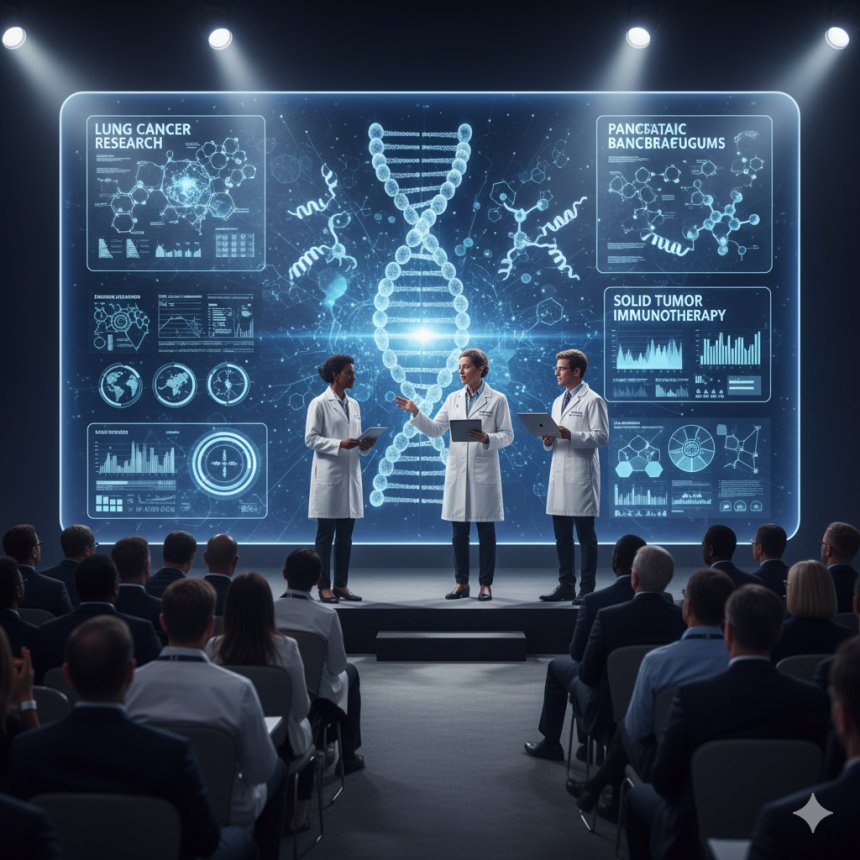
The European Society for Medical Oncology (ESMO) Congress 2025, held in Berlin from October 17–21, served as a global stage for cutting-edge oncology research. Among the most impactful presentations came from Memorial Sloan Kettering Cancer Center (MSK), where scientists and physicians unveiled results from several first-in-human clinical trials and novel therapeutic strategies targeting some of the most challenging cancer types — including lung cancer, pancreatic cancer, and solid tumors with mismatch repair deficiencies (MMRd).
These presentations reflect MSK’s enduring commitment to pioneering cancer therapies that are not only scientifically innovative but also clinically meaningful. With every phase 1 trial, researchers are redefining how precision medicine and immunotherapy intersect to create personalized solutions for patients with limited treatment options.
New Hope for Lung and Solid Tumor Patients: The Iza-Bren Trial
One of the standout studies at ESMO 2025 was the phase 1 clinical trial of izalontamab brengitecan (iza-bren/BL-B01D1), led by thoracic oncologist Dr. Helena Yu. This experimental therapy represents a leap forward in the realm of antibody-drug conjugates (ADCs) — compounds that combine the targeting ability of antibodies with the potency of chemotherapy.
What makes iza-bren exceptional is its bispecific mechanism. Unlike standard ADCs that target a single receptor, iza-bren is designed to recognize both EGFR and HER3 gene mutations, which frequently drive the growth of cancers such as non-small cell lung cancer (NSCLC). Once attached, it delivers a highly focused dose of chemotherapy directly into the cancer cells, reducing collateral damage to healthy tissue.
In the early results presented, 75% of NSCLC patients receiving the optimal dose experienced tumor shrinkage. The most common side effect was manageable low blood counts, a testament to the drug’s tolerability. With 107 patients enrolled across 22 U.S. sites, this study shows strong preliminary efficacy, fueling optimism for future phase 2 and 3 trials.
According to recent studies (Nature Reviews Clinical Oncology, 2024), bispecific ADCs like iza-bren could redefine next-generation cancer therapy by offering high precision with reduced toxicity — a paradigm shift in oncology treatment design.
Pancreatic Cancer Innovation: Combining Chemotherapy and Stem Cell Transplant
Pancreatic cancer remains one of the most lethal malignancies, often resisting conventional therapies. At ESMO 2025, Dr. Kenneth Yu presented the SHARON trial, a phase 1 study exploring a novel approach for patients with inherited BRCA1/2 or PALB2 mutations — genetic profiles known to increase cancer susceptibility.
This clinical trial combines targeted chemotherapy with an autologous stem cell transplant (using the patient’s own stem cells). The treatment sequence includes chemotherapy followed by transplantation, repeated six weeks later to strengthen anti-cancer effects while restoring healthy blood cells.
So far, 11 patients with advanced stage 3 pancreatic cancer have participated. Among those whose disease was stable or responsive before treatment, the average progression-free survival reached 14.2 months — significantly longer than typical expectations for late-stage cases. Notably, two patients remain disease-free at 23 and 48 months, signaling remarkable durability.
The therapy demonstrated no unexpected side effects, highlighting its potential as a safe and effective option for patients with genetic risk factors. This innovative collaboration between MSK and Massachusetts General Hospital underscores the growing importance of cross-disciplinary partnerships in developing next-generation cancer therapies.
As noted by Journal of Clinical Oncology (2025), combining stem cell transplantation with targeted chemotherapy could pave the way for a new standard in managing inherited pancreatic cancers, a domain historically limited in therapeutic breakthroughs.
Understanding MMRd and MSI-H: Personalized Immunotherapy Insights
One of the most insightful studies presented by MSK came from Dr. Benoît Rousseau and his international research team. Their analysis focused on mismatch repair deficiency (MMRd) and microsatellite instability-high (MSI-H) — two genetic conditions that make tumors particularly responsive to immune checkpoint inhibitors.
The team analyzed data from 2,000 MSK patients and a commercial database of 13,000 additional cases to understand how the mechanism behind MMRd influences treatment response and survival outcomes.
Their findings revealed that not all MMRd or MSI-H tumors behave the same way. For instance, patients with Lynch syndrome or MSI-H colorectal cancer exhibited significantly better long-term responses to immunotherapy compared to those with other mechanisms of MMRd. The results emphasize that understanding the origin of genetic instability is essential to designing truly personalized treatment plans.
This aligns with growing evidence in Cancer Discovery (2024) suggesting that the molecular drivers of MMRd may serve as biomarkers predicting both response and resistance to immune checkpoint blockade therapies.
New Drug Targeting MSI-H/MMRd Tumors: Early Promise for HRO761
Completing the series of impactful presentations, Dr. Michael Foote shared the first human data on HRO761, a novel targeted therapy designed for advanced MSI-H/MMRd tumors that have progressed despite prior treatments. This drug inhibits Werner helicase, a key protein involved in DNA repair, effectively exploiting the tumor’s existing repair deficiencies.
In the phase 1 study involving 57 patients, the results were promising:
-
58% had colorectal cancer,
-
11% uterine cancers,
-
11% gastric or gastroesophageal cancers, and
-
21% other tumor types.
Early analysis revealed that 80% of colorectal cancer patients achieved disease control, and 70% showed no tumor DNA in their blood after one month of treatment. Side effects were mild, and no patient discontinued due to adverse events.
The ongoing study aims to refine dosing and explore combination regimens with other targeted therapies. Research published in Nature Medicine (2025) supports this strategy, noting that Werner helicase inhibition could become a foundational approach for tumors with DNA repair deficiencies.
Scientific References:
-
Smith, L. et al. (2024). Bispecific Antibody-Drug Conjugates in Oncology: Mechanisms and Clinical Progress. Nature Reviews Clinical Oncology, 21(2), 95–108.
-
Zhao, K. et al. (2025). Combining Chemotherapy with Stem Cell Transplantation in Pancreatic Cancer: Early Clinical Outcomes. Journal of Clinical Oncology, 43(7), 1503–1512.
-
Rousseau, B. et al. (2024). Mechanistic Insights into MMRd and MSI-H Tumor Responses to Immunotherapy. Cancer Discovery, 14(5), 980–992.
-
Foote, M. et al. (2025). Targeting Werner Helicase in MSI-H/MMRd Tumors: Results from a Phase 1 Clinical Trial. Nature Medicine, 31(4), 612–621.
Share