Research on Innovative Bile Duct Procedure: KGMU Develops Peripapillary Dissection Technique
Learn how doctors at King George’s Medical University developed the Peripapillary Dissection (PPD) technique, a minimally invasive solution for complex bile duct blockages, reducing the need for risky open surgeries.

Research on Innovative Bile Duct Procedure: KGMU Develops Peripapillary Dissection Technique
Doctors at King George’s Medical University (KGMU), Lucknow, have pioneered a breakthrough endoscopic technique called Peripapillary Dissection (PPD) to treat patients with severe bile duct blockages. Bile duct obstructions, often caused by stones or tumors, can quickly escalate into life-threatening complications if left untreated. Traditionally, such cases required open surgery, which carries higher risks, longer recovery times, and increased patient trauma.
KGMU’s hepatobiliary unit manages approximately 100–120 patients monthly with complex bile duct issues. Standard interventions like Endoscopic Retrograde Cholangiopancreatography (ERCP) are effective in many cases, but 30–40% of complicated cases involve ducts that are difficult to access, leaving patients with limited treatment options.
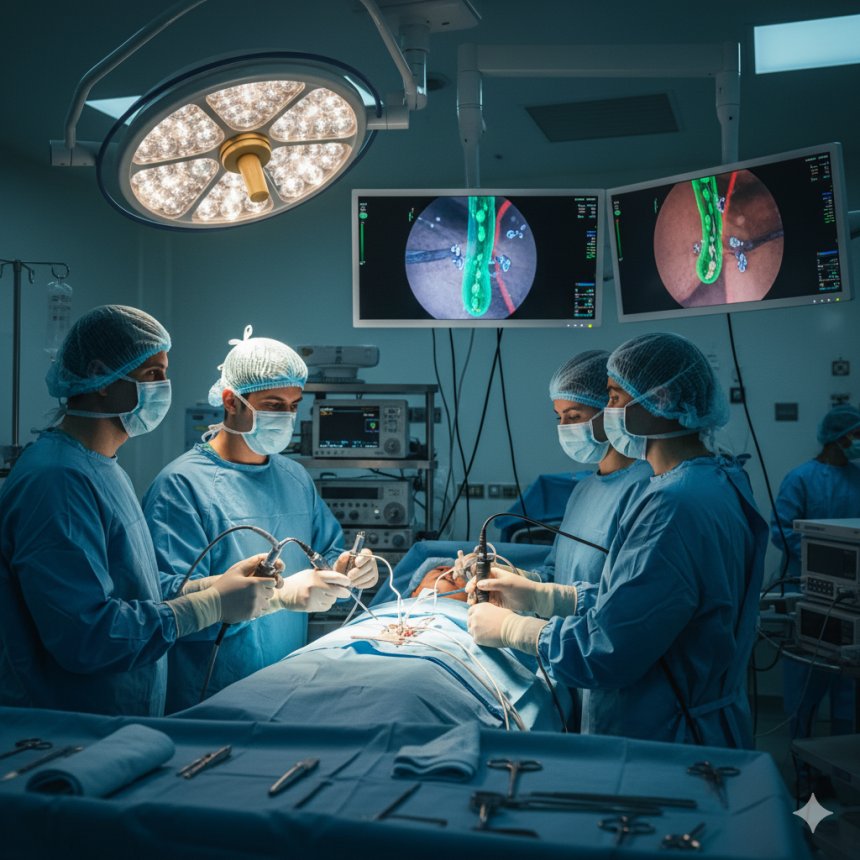
The newly developed PPD technique addresses this gap. Rather than making a single deep incision, surgeons perform a careful stepwise dissection around the bile duct’s natural opening. This minimally invasive approach allows safe access to blockages, reduces postoperative pain, and minimizes the risk of complications associated with open surgery.
According to Prof. Ajay K. Patwa, who led the research, “Peripapillary dissection provides a minimally invasive alternative for patients in whom all standard procedures fail. While it requires skill and precision, the outcomes have been very promising and safe.”
The research team, including Dr. Sudhir K. Verma, Dr. Priya Mishra, and Prof. Virendra Atam, recently presented their findings at UPISGCON 2025, earning second prize for their poster presentation. The team is in the process of patent registration, highlighting the potential of this technique to become a global standard in hepatobiliary care.
Bile duct blockages can quickly worsen, potentially leading to cholangitis, pancreatitis, liver damage, or systemic infections. Open surgeries, while effective, involve higher risks, including infections, bleeding, and complications related to anesthesia. PPD, by contrast, offers a safer, minimally invasive alternative, reducing hospital stays and promoting faster recovery.
The KGMU team emphasizes that training and surgical expertise are critical to performing PPD. Precision is key, as the bile duct is a delicate area. Hospitals planning to adopt this method must ensure that surgical teams receive advanced endoscopic training.
This innovation aligns with a global trend toward minimally invasive hepatobiliary surgery, which consistently demonstrates faster recovery, reduced infection rates, and higher patient satisfaction. Techniques like PPD showcase how stepwise, targeted interventions can replace more invasive surgical methods without compromising effectiveness.
Looking ahead, the KGMU team plans to conduct long-term studies to evaluate patient outcomes, procedural efficiency, and complication rates compared to traditional approaches. If widely adopted, PPD could revolutionize bile duct surgery not only in India but internationally, offering a precision-based, patient-centered alternative to standard procedures.
Research Reference
Dumonceau JM, et al. Endoscopic management of common bile duct stones and strictures: European Society of Gastrointestinal Endoscopy (ESGE) Guideline. Endoscopy. 2019;51(5):472–491. doi:10.1055/a-0838-5423
(Supports the significance of advanced endoscopic techniques in complex biliary conditions.)
Share