Research Reveals You Don’t Need Extreme Happiness to Live Longer The Science Behind the Happiness Threshold and Chronic Disease
A groundbreaking global study finds that moderate happiness—not extreme joy—can reduce the risk of premature death from chronic diseases like cancer, diabetes, and heart disease. Discover the science behind the happiness-health connection.

Research Reveals You Don’t Need Extreme Happiness to Live Longer: The Science Behind the Happiness Threshold and Chronic Disease
In a world obsessed with chasing happiness, new scientific research suggests we may not need to be extraordinarily happy to enjoy better health and longevity. A large-scale global study, published in Frontiers of Medicine (2025), has uncovered a “happiness threshold” — a specific level of well-being above which the risk of dying prematurely from chronic diseases such as cancer, diabetes, and heart disease significantly declines.
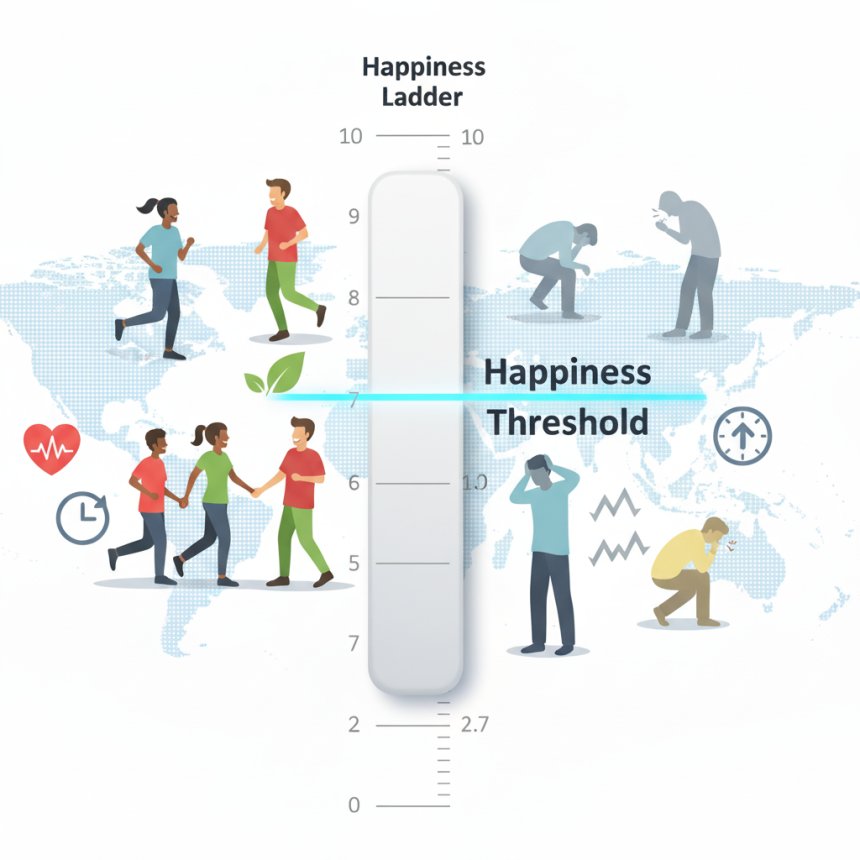
Drawing on data from 123 countries spanning 15 years, researchers found that once a population’s average happiness score surpassed 2.7 on the Cantril Life Ladder Scale, each additional percentage increase in happiness correlated with a 0.43% reduction in premature deaths related to chronic illness. The implication? You don’t need to be ecstatic to live longer — just moderately content.
The Global Study That Redefines the Link Between Happiness and Health
This unprecedented analysis integrated national well-being scores with mortality data to explore how subjective happiness influences health outcomes across diverse cultures. By comparing self-reported happiness levels with death rates from chronic diseases between 2006 and 2021, the researchers were able to identify measurable health benefits linked to modest improvements in life satisfaction.
Respondents were asked to rate their current and future life satisfaction on a scale of 0 to 10, with 0 representing the “worst possible life” and 10 the “best possible life.” The average of these responses offered an insightful snapshot of a nation’s collective happiness.
Remarkably, mortality rates began to decline once countries exceeded a score of 2.7. This suggests that happiness doesn’t need to reach idealized levels to yield protective health effects—something as simple as moving from dissatisfaction to mild contentment can make a difference.
The Biological Science Behind the Happiness-Health Connection
Although the study stops short of proving direct causation, decades of research have pointed to several biological and psychological mechanisms that explain why happier individuals tend to live longer, healthier lives.
When people experience positive emotions, their bodies produce fewer stress hormones such as cortisol and adrenaline. According to Dr. John Hunter, assistant professor of psychology at Chapman University, “Positive emotion serves as a buffer for stressful experiences. When stress hits, happier people react less severely—their heart rate and blood pressure spike less, and stress hormones are released in smaller amounts.”
Reduced stress reactivity has profound implications. Chronic stress contributes to inflammation, immune suppression, and metabolic dysfunction—key factors in the development of conditions like diabetes, hypertension, and cardiovascular disease. By minimizing these responses, happiness indirectly safeguards the body from the slow wear and tear caused by chronic stress.
Social and Behavioral Benefits of Happiness
Happiness doesn’t just shape biology; it also drives behavior. According to Dr. Alan Rozanski, a cardiologist and professor at the Icahn School of Medicine at Mount Sinai, “People who are optimistic and socially active tend to exercise more, eat better, and sleep more soundly. They’re proactive about their health.”
This connection underscores the role of social well-being in physical health. Happy people often have stronger support networks and are more likely to engage in community and family life. These social bonds provide emotional stability and help buffer the psychological toll of everyday stressors.
Over time, this network of habits—better nutrition, regular exercise, sufficient rest, and meaningful social interaction—compounds to create a self-reinforcing cycle of wellness.
Understanding the Happiness Threshold
The key takeaway from the study is the concept of a “tipping point”—the level of well-being where happiness begins to offer measurable protection against chronic disease mortality. The identified threshold of 2.7 on the Cantril ladder may sound low, but it represents a crucial psychological boundary between dissatisfaction and moderate contentment.
Above this threshold, every incremental improvement yields diminishing but still significant health returns. In simpler terms, going from unhappy to content is far more beneficial for longevity than going from content to ecstatic.
This finding challenges the common cultural message that more happiness is always better, suggesting instead that basic emotional stability and satisfaction might be enough to confer major health benefits.
Happiness as a Public Health Resource
Beyond individual implications, the research has major significance for public health policy. Study author Dr. Mihai Iuga emphasized that happiness should be treated as a “public health resource.” Governments and policymakers could integrate well-being metrics into national health strategies to complement traditional measures like healthcare spending or disease prevention programs.
For example, improving governance, social equity, and environmental conditions—all of which influence collective happiness—could indirectly reduce chronic disease mortality. The study suggests that countries investing in mental health services, urban green spaces, and work-life balance policies may see long-term gains in population health and longevity.
Limitations of the Research
While the findings are compelling, the authors acknowledge several limitations. The happiness data used were self-reported, introducing possible cultural and subjective biases. In some societies, happiness might be interpreted more as material success or life satisfaction rather than emotional joy.
Moreover, because this is a correlational study, it cannot definitively prove that happiness causes lower mortality. Other factors—such as socioeconomic status, access to healthcare, and cultural norms—may contribute to both higher happiness and lower disease rates.
Still, even when controlling for these variables, the consistent association across over a hundred nations lends strong support to the theory that well-being and health are deeply intertwined.
A Practical Takeaway: The Pursuit of "Enough" Happiness
For the average person, this research offers a refreshing and realistic message: you don’t need to be blissfully happy to reap the health benefits. Focusing on small, sustainable improvements in well-being—such as gratitude, connection, and purpose—may do more for longevity than the relentless pursuit of constant joy.
Simple practices like daily exercise, mindful breathing, quality sleep, and social interaction all enhance happiness incrementally, moving individuals closer to that protective threshold. Instead of striving for perfect happiness, the goal may simply be to nurture consistent contentment.
References
-
Iuga, M. et al. (2025). The Happiness Threshold and Chronic Disease Mortality: A Global 15-Year Study. Frontiers of Medicine.
-
Rozanski, A. (2023). Positive Psychology and Cardiovascular Health: Mechanisms and Outcomes. American Journal of Cardiology.
-
Hunter, J. (2024). Emotion Regulation and Health: The Role of Positive Affect. Journal of Behavioral Medicine.
-
World Health Organization (2021). Global Report on Chronic Diseases.
-
The Lancet (2024). Trends in Chronic Disease Prevalence in Young Adults in the U.S.
Share