News: WHO Launches Global Framework to Strengthen National Health Emergency Preparedness and Response
WHO Launches Global Framework to Strengthen National Health Emergency Preparedness and Response


WHO: A Global Step Toward Stronger Health Emergency Readiness
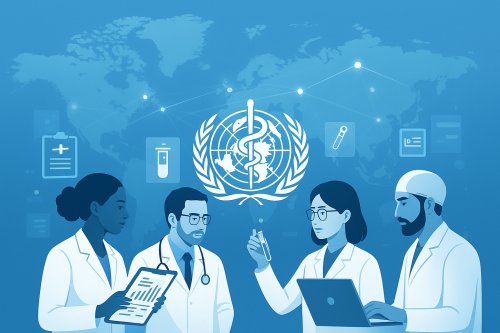
The World Health Organization (WHO) has introduced the National Health Emergency Alert and Response Framework—a comprehensive guide designed to fortify global and national capacities for health emergency preparedness and response. Developed through collaboration with international experts and informed by lessons from the COVID-19 pandemic, the framework establishes a standardized, evidence-based approach to managing future crises effectively.
As health emergencies become increasingly complex due to climate change, rapid urbanization, geopolitical instability, and increased global mobility, WHO’s latest framework offers a timely, strategic blueprint for governments, health authorities, and stakeholders seeking to protect lives and ensure continuity of care during crises.
Impact on the Healthcare Sector
The new framework represents a major advancement in public health emergency governance, offering structured guidance for multi-sectoral coordination and rapid response. It consolidates over 300 recommendations developed under WHO’s Health Emergency Preparedness, Resilience and Response (HEPR) architecture.
By adopting this model, nations can establish consistent alert mechanisms, decision-making protocols, and operational workflows, ensuring that early detection, notification, and response are harmonized across local and national levels. The framework also integrates real-time data evaluation and continuous performance assessment, ensuring that systems evolve dynamically with each crisis.
Effects on Healthcare Professionals
For healthcare professionals, the framework emphasizes readiness, training, and inter-sectoral communication. It encourages the creation of standardized response teams and communication pathways between clinical and public health entities.
Physicians, emergency coordinators, and public health workers are expected to benefit from improved role clarity and access to actionable tools, such as checklists, flowcharts, and performance benchmarks. The 7-1-7 performance model—detecting outbreaks within seven days, notifying authorities within one day, and initiating key response actions within seven days—sets measurable expectations for rapid containment.
This structured approach also highlights the importance of simulation exercises, workforce capacity building, and digital alert systems, ensuring that healthcare professionals are equipped to manage both infectious outbreaks and environmental disasters efficiently.
Global and Societal Implications
The framework’s broader impact extends beyond healthcare institutions. It strengthens national resilience, reduces morbidity and mortality, and enhances public confidence in crisis response systems.
By aligning national response protocols with WHO’s global standards, countries can improve cross-border collaboration and data transparency—key factors in mitigating transnational health threats. Moreover, the integration of risk communication and community engagement strategies ensures that populations remain informed, cooperative, and resilient during emergencies.
In developing regions, where resource limitations can hinder rapid response, this framework offers a scalable model adaptable to varying levels of infrastructure and capacity. It encourages governments to invest in preparedness infrastructure and leverage partnerships with non-state actors to strengthen local readiness.
Future Outlook: Building a Unified, Resilient Global Health System
Looking ahead, WHO’s framework sets the foundation for a new era of coordinated global health defense. By institutionalizing early warning systems, fostering inter-agency collaboration, and embedding performance evaluation into response cycles, countries can achieve greater autonomy and accountability in managing health crises.
Future developments are likely to include AI-driven outbreak prediction models, digital command centers, and data-sharing platforms that enhance the speed and precision of emergency decision-making. WHO’s continued commitment to this evolving architecture reflects a shift from reactive to proactive global health security—a transformation crucial to protecting populations in the decades ahead.
Conclusion: Strengthening Resilience Through Unified Response
The National Health Emergency Alert and Response Framework underscores WHO’s enduring mission to safeguard health systems through preparedness, coordination, and accountability. By standardizing processes from detection to operational review, it enables nations to detect faster, act decisively, and recover stronger.
For healthcare professionals, the framework offers not only tools but also a renewed sense of purpose in building a resilient, interconnected global health ecosystem—one that learns, adapts, and evolves with every challenge.
Share